
Snow, ice, fog, heavy rain and long dark evenings make winter the hardest time of year to drive. Most of the risk can be managed before anyone sets off, by deciding whether the journey is needed, checking the vehicle and knowing how to drive when grip and visibility drop.
Does the journey need to happen?
In icy or snowy weather, the Highway Code says don't drive unless the journey is essential (rule 228). Check the Met Office forecast for the whole route and ask whether the visit could move to another day or be done by phone or video. Staff should know they can delay a journey in bad weather. If you're unsure about the conditions, speak to your manager before you set off.
Plan the route and allow extra time
Check live conditions with National Highways in England, Traffic Scotland or Traffic Wales. Stick to major roads where you can, as they are more likely to be gritted. Allow extra time to clear the vehicle and for the journey itself, as running late is what tempts people to drive too fast. Let someone know your route and when you expect to arrive.
Check the vehicle
- Tyres: the legal minimum tread is 1.6mm, but the AA recommends at least 3mm for winter.
- Lights and number plates: working and clean.
- Wipers and screenwash: replace worn blades and use screenwash that protects to at least -35°C. Switch auto wipers off before parking if frost is likely, as frozen blades can damage the motor.
- Fuel or charge: never below a quarter of a tank. Cold weather reduces electric vehicle range, so start fully charged.
- Warning lights: act on any dashboard light that wasn't on before.
Before you pull away, clear all snow and ice from every window, mirror, light and the roof (rule 229). Snow left on the roof can slide onto your windscreen when you brake.
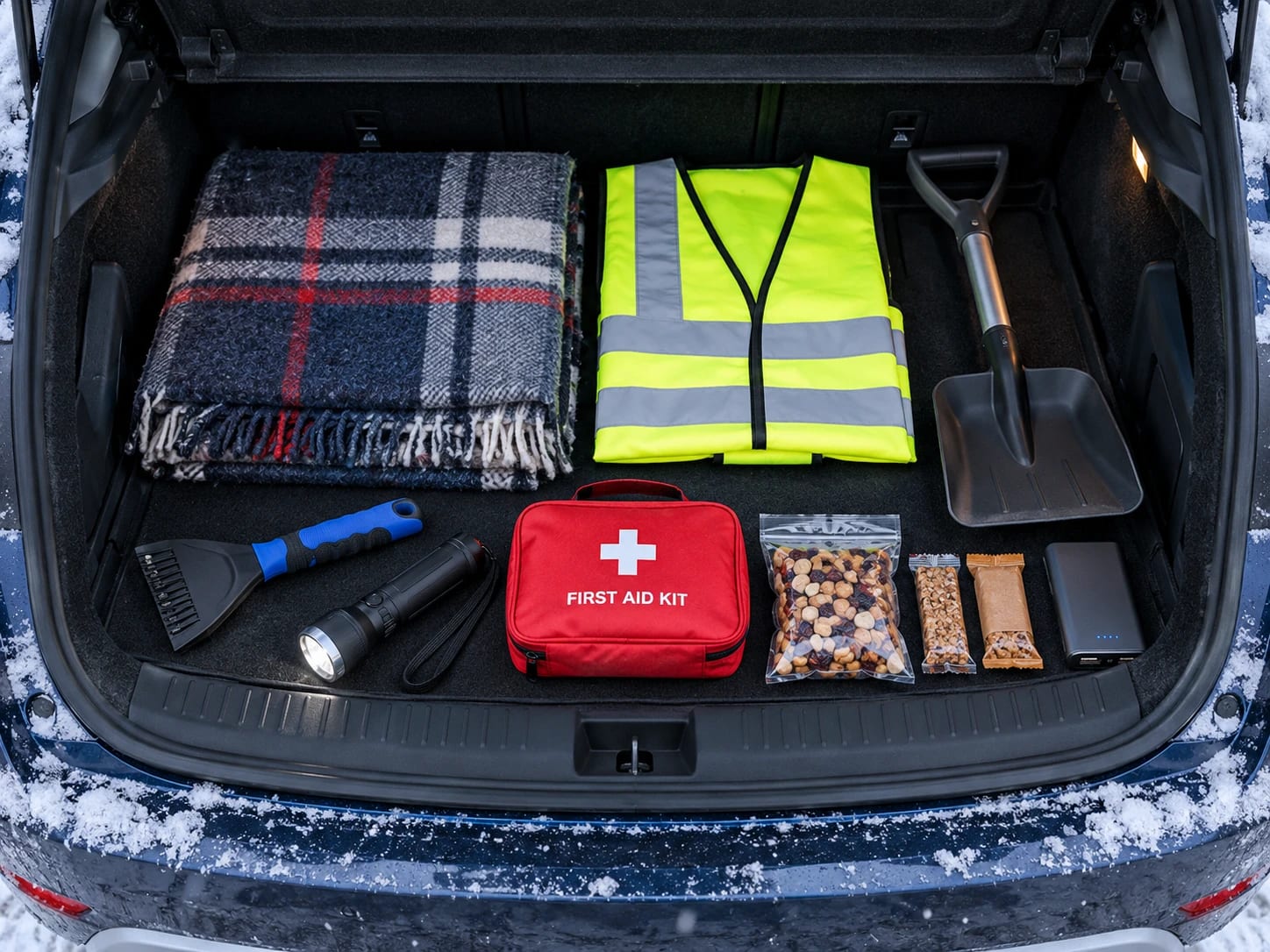
Keep a winter kit in the vehicle: scraper and de icer, torch, charged phone and power bank, warm clothes, blanket, boots, hi-vis vest, warning triangle, first aid kit, water, snacks, shovel and a square of old carpet to put under the wheels if you get stuck.
Driving on snow and ice
On ice, stopping distances can be up to ten times longer than on a dry road (rule 230).
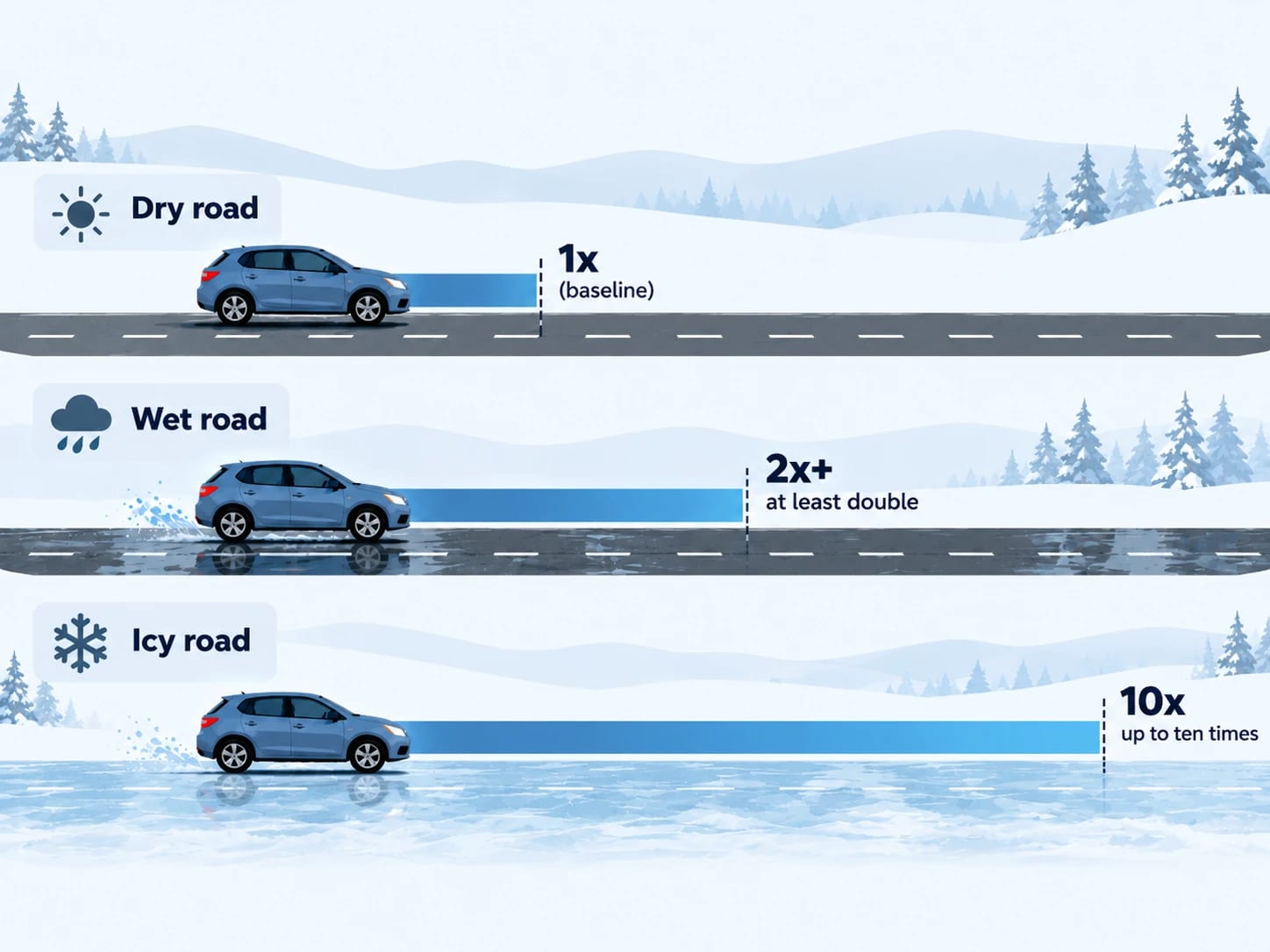
- Leave up to ten times the normal gap to the vehicle in front.
- Brake, accelerate and steer gently. Slow down before bends, not in them.
- On hills, keep a steady speed going up and use a low gear coming down.
- Use dipped headlights in falling snow. Daytime running lights often don't light the back of the vehicle.
- Watch for ice on bridges and shaded stretches, which freeze first and thaw last.
If you skid, ease off the accelerator, don't stamp on the brake and steer gently into the skid.
Rain, floods, fog and low sun
- Rain: stopping distances at least double (rule 227). If the steering goes light, you're aquaplaning. Ease off and don't brake sharply.
- Floods: if you can't tell how deep the water is, don't drive through it. If you must, go slowly in first gear and test your brakes afterwards.
- Fog: use headlights when you can't see more than 100 metres. Fog lights are allowed then, but switch them off when visibility improves (rules 226 and 236).
- Low sun and darkness: keep the windscreen clean inside and out, carry sunglasses and slow down near pedestrians and cyclists, who are harder to see.
If you get stuck or break down
Stay with the vehicle and call for help. If you run the engine to keep warm, make sure snow isn't blocking the exhaust. On a motorway, try to leave at the next junction. If you can't, get out on the side away from traffic and wait behind the barrier if it's safe. If it isn't, stay in with your seatbelt on and call 999 (National Highways advice).
What employers should have in place

Health and safety law applies to driving for work as it does to any other work activity (HSE). Make sure you have:
- a winter driving policy that says who decides whether journeys go ahead
- driving covered in your risk assessment
- schedules with extra time built in
- regular vehicle checks and a winter kit in every vehicle
- a check in arrangement for lone drivers
- business insurance in place for staff using their own cars
If you'd like a copy of our Safety Briefing on winter driving to present to your teams, contact us here: Contact – Optimum Safety.

